$60,000 in scholarships at Auburn
Chose: Auburn University
Before Boosted Brains, Brown was sitting in a group ACT class watching her teacher spoon-feed solutions in hours-long lectures. The pace was set by the slowest learner in the room. The questions she got wrong on her own time never got addressed individually—she’d just be told the right answer in the next group session, and then she’d miss the same kind of question on the next test.
Brown wasn’t a struggling student. She was an excellent student in the wrong system.
None of this was her fault. The group class didn’t see her specific weaknesses, didn’t teach to them, didn’t even know they existed.
Her mom got the brunt of it after class. Long monologues about how boring the class was. How time-consuming it was. How nothing was changing. The score wasn’t moving and the family had nothing to show for the time invested.
What changed when the system fit the student
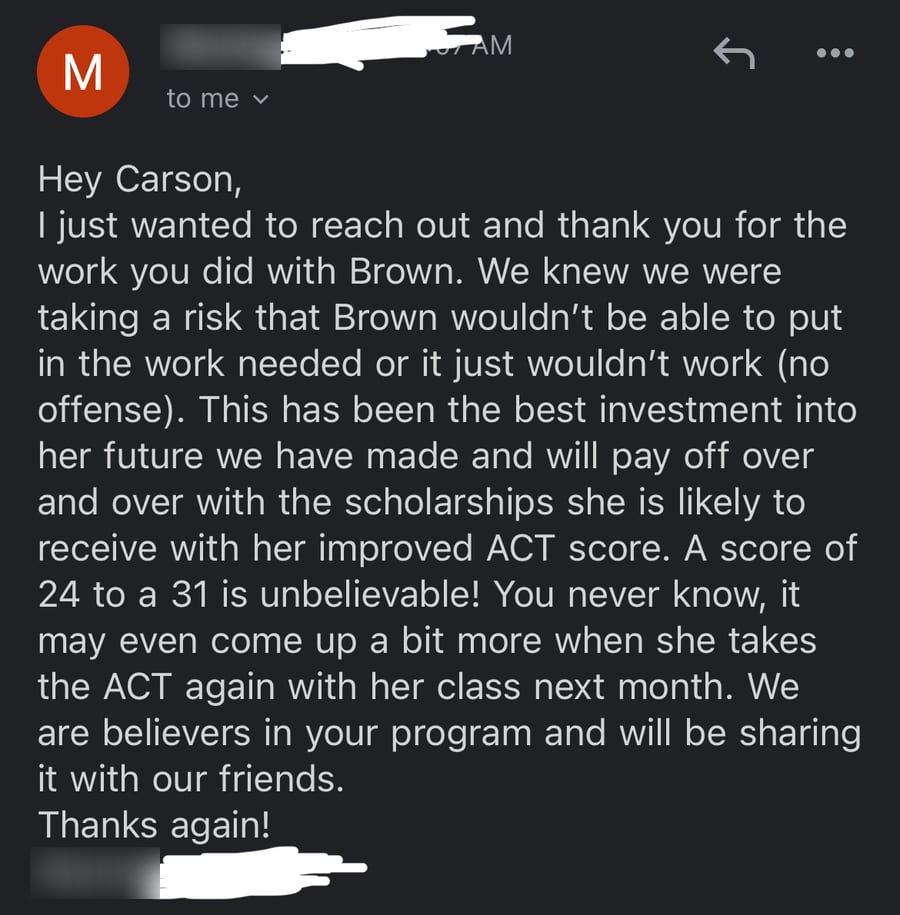
When Brown joined Boosted Brains, the structure flipped. Instead of group lectures that drifted past her actual weak spots, she got a day-by-day plan built around the specific question types she was missing.
The first test with the program: 24 to 28.
The second test inside the sprint: 28 to 31.
That’s a 7-point composite jump in 8 weeks of focused work. The program officially ended there.
The part that kept happening after the program ended
Here’s where Brown’s story gets unusual.
After the sprint, Brown took the ACT three more times over the following months: twice at her school, and once in July. She didn’t sign up for another sprint. She just kept using the program resources we’d given her—drilling lightly, mostly to stay sharp.
Her score kept ticking up:
- 31 → 32
- 32 → 33
- 33 → 34
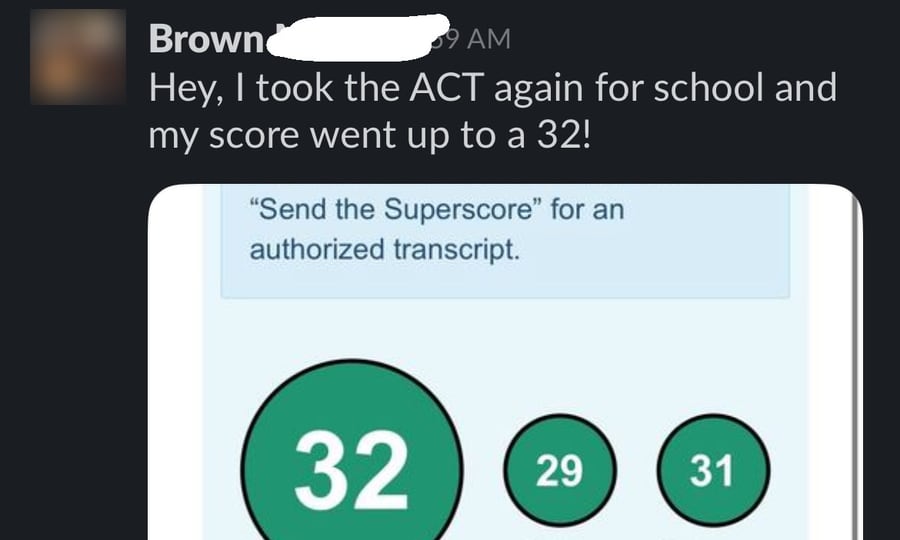
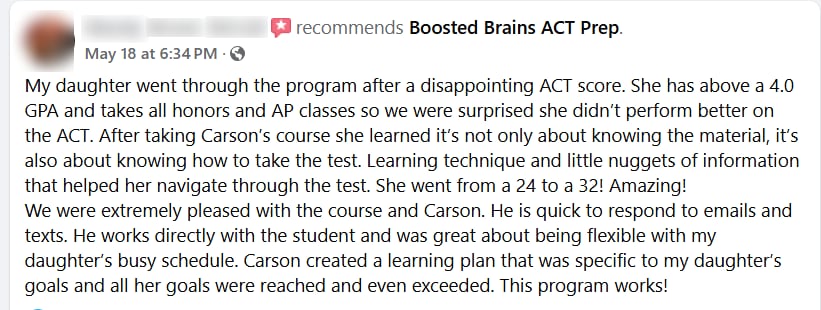
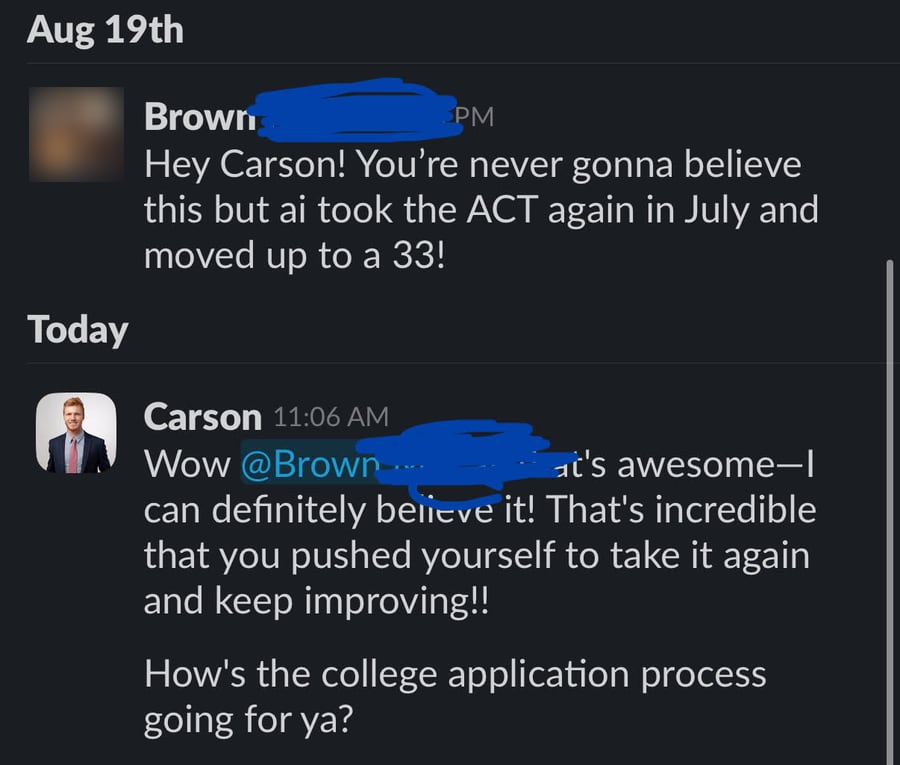

The 10-point total improvement (24 → 34) happened over a longer arc than the original sprint, but the momentum that drove it came directly from the personalized work in those 8 weeks. The group class hadn’t built any of that. Eight weeks of targeted coaching did.
She earned $60,000 in scholarships at Auburn.
What Brown’s story shows
A lot of families come in after a group ACT class hasn’t worked and assume the student is the problem. Usually it’s the opposite—the student is fine, the format wasn’t.
The other thing worth flagging: the kind of improvement that happens in a properly structured 8-week sprint doesn’t necessarily stop the day the sprint ends. The strategies and patterns lock in. Brown picked up three more composite points, lightly studying, after the program officially wrapped.
If your student is in a group class and the score isn’t moving despite the time investment, that’s almost always a system fit problem, not a student problem.
What we did differently
- Replaced an hours-long group lecture format with a fully personalized day-by-day plan.
- Identified the specific question types Brown was repeatedly missing (the group class never noticed).
- Skipped everything she'd already mastered — no more time wasted on her strong sections.
- Built a daily drill structure tight enough that the same mistakes stopped repeating.
- Gave her continued access to program resources after the sprint ended so she could keep improving on in-school tests.
Coached by
Boosted Brains coaching team
Every Boosted Brains coach has a perfect or near-perfect ACT score and has been personally trained by Carson Weekley (perfect 36) and Martin (Head of Student Success).